
by Fairhope Hospice | Nov 18, 2022 | Uncategorized
By Kristin Glasure, FAIRHOPE president and CEO
When someone is diagnosed with a serious illness, it can be challenging to prioritize advance care planning conversations with their family and doctors. However, it is important to ensure care is aligned with their wishes as early as possible. Confusion can sometimes arise around the specific differences between palliative care and hospice in deciding what level of care is best. While the objective of both palliative care and hospice is pain and symptom relief, the prognosis and goals of care are different.
Palliative care seeks to enhance the quality of life of patients and families who are faced with serious illness. It focuses on increasing comfort through prevention and treatment of distressing symptoms. In addition to expert symptom management, palliative care focuses on clear communication, advanced care planning and coordination of care. It is a resource for those living with a serious illness, such as heart failure, cancer, dementia, Parkinson’s disease, and many other diagnoses. Palliative care can be provided at home, in hospitals, in nursing homes, and in outpatient palliative care clinics. Palliative care encompasses the whole self, caring for the body, mind and spiritual needs of patients and their families, while also providing relief from pain and other symptoms. Medicare, Medicaid, and many insurance plans cover the medical portions of palliative care, and veterans may be eligible for palliative care through the United States Department of Veterans Affairs.
Hospice care focuses on providing comfort care for those with a terminal illness, as well as lending emotional, spiritual, and social support to their families and friends during their illness and grieving periods. It is important to understand that stopping treatment aimed at curing an illness does not mean discontinuing treatment for all medical conditions, such as high blood pressure. Hospice care can be provided at home, in nursing and assisted living facilities, in retirement communities, hospitals, and at an inpatient hospice setting such as The Pickering House. Hospice care is most often paid for as a benefit of Medicare. Hospice may also be paid for as part of a Medicare Advantage plan, by state Medicaid plans, or by private insurance.
Palliative care can begin at the discretion of the physician and patient at any time, at any stage of illness, terminal or not. Eligibility for hospice care requires that two physicians certify that the patient has less than six months to live if the disease follows its usual course. If health changes, the kind of care being received can be changed.
Deciding between palliative and hospice care is not always easy, and it is important to discuss your options as care can be most effective when started early. Additionally, a person may receive palliative care for many years before entering hospice care. In some cases, someone may even recover from their condition while undergoing palliative care depending on factors such as illness and prognosis.
It can be beneficial to talk with someone who is familiar with palliative care and hospice care services to determine what is best for you or someone you are caring for. To help you decide, your doctor may often be able to outline benefits from either type of care. To enter hospice, all medical treatments aimed at curing the illness or prolonging life must be stopped, which can be one of the most difficult decisions to make as part of treatment. It can take substantial time and reflection with family, healthcare providers, and counselors or social workers to help make the best decision.

by Fairhope Hospice | Oct 19, 2022 | Uncategorized
By Kristin Glasure, FAIRHOPE president and CEO
 Improving end-of-life care is the goal for our community which, of course, includes the honor of taking care of our beloved veterans. FAIRHOPE Hospice & Palliative Care, Inc. believes in recognizing the services and sacrifices made by our veterans and their families.
As part of that commitment, we participate in the We Honor Veterans program which recognizes the unique needs of America’s veterans and their families. The goal of the program is simple—to care for and honor those who have served when they reach the end of life.
We Honor Veterans is a program of the National Hospice and Palliative Care Organization (NHPCO), the nation’s largest membership organization for providers and professionals who care for people affected by serious and life-limiting illnesses, in collaboration with the Department of Veterans Affairs (VA).
Through this pioneering program, veterans are served with respect, integrity, and dignity with veteran-specific care and services provided by a competent and highly skilled workforce. Community providers, in partnership with VA staff, focus on respectful inquiry, compassionate listening, and grateful acknowledgment to guide veterans through their life stories toward a more peaceful ending. A vast majority of veterans are not enrolled in VA and may not be aware of the end-of-life services and benefits available to them, including the Medicare Hospice Benefit and VA-paid hospice care.
At FAIRHOPE, we often provide a military pinning ceremony for our veterans who so bravely served our country. This free public acknowledgment of the military service and sacrifices made by the veteran and his or her family is available to everyone in our community. The ceremony gives an opportunity for each veteran to share part of his or her story and gain a sense of meaning and purpose.
We are fortunate to have a team of volunteers who often facilitate the pinning ceremony. Fairhope is always looking for those who would like to join us in serving those who have served us. We will also be part of the opening ceremony of the Freedom’s Never Free event at the Fairfield County Fairgrounds on Thursday, November 3 at 4 p.m. The event runs through Saturday, November 5.
We thank all veterans for your service—your time, bravery, and sacrifice—to our country. We are indebted to you and your family for all that you have given.
by Fairhope Hospice | Sep 28, 2022 | Uncategorized
 By Kristin Glasure, FAIRHOPE president and CEO
September is Healthy Aging Month, which is an ideal time to focus on adopting a healthier lifestyle that includes staying active, improving physical and mental health, eating healthy food, and getting restorative sleep. Here are seven tips to help incorporate healthier habits into your lifestyle:
- Manage stress. Individuals who have higher levels of baseline stress are more prone to diabetes, depression, heart disease and obesity. Discover a creative outlet or take up activities to improve your flexibility and mobility with stretching, yoga, and mindfulness to help reduce stress.
- Focus on regular exercise. Physical activity improves overall health and well-being, and it is ideal to incorporate at least 30 minutes into your daily routine. Exercise builds strength, improves balance and coordination, and can help prevent disease and weight gain. A personal trainer or group fitness instructor can provide support when a customized experience is desired.
- Expand nutritional knowledge. Maintain a well-balanced diet by eating a healthy diet rich in colorful fruits, vegetables, lean protein, and healthy fats. Limit starchy, fried, and processed foods.
- Catch enough rest. Adults need between seven and nine hours of sleep every night to allow the body time to refresh and renew itself.
- Schedule healthcare appointments. Yearly annual checkups and other preventative screenings, including pap smears, colonoscopies, mammograms, and bone density scans (DEXA), can help detect diseases in their early stages. Hearing well is important to cognitive and overall health as well as maintaining a productive lifestyle, and assistive technologies can provide hearing help when needed. Additionally, telehealth options including virtual video visits with providers and specialists and remote monitoring provide additional health data from home.
- Stay socially active. Healthy aging includes finding new things you enjoy and learning to adapt to change. A sedentary and isolated lifestyle can lead to health issues and depression. It’s never too late to reinvent yourself; find a new hobby, pursue a new career, join a class, or sign up for volunteer opportunities.
- Maintain cognitive health. A rich, varied mix of learning, processing and problem solving will keep your brain alert. Mental stimulation preserves brain cells and can even generate new cells and connections. Exercise and challenge your brain by taking the opportunity to learn new skills like a language, instrument, or hobby.

by Fairhope Hospice | Aug 31, 2022 | Uncategorized
By Kristin Glasure, FAIRHOPE president and CEO
A holistic approach to mental health and physical wellness can mean an improved quality of life for older adults. When practicing self-care that leads to positive aging, it is not only important to consider physical dimensions such as blood pressure and cholesterol levels, but it is also critical to consider the emotional, social, spiritual, and intellectual aspects.
With that in mind, here are eight ways older adults can maintain good spirits and a healthy lifestyle for their minds and body.
- Be physically active. Staying active is important for the mental and physical well-being of older adults. The National Institute on Aging offers a variety of resources about the benefits of exercise and physical activity. There are emotional benefits as well, including boosting mood, confidence, and feelings of independence. Low-impact exercises such as stretching and strength training are necessary to reduce the risk of common age-related concerns like bone fractures and joint pain. Exercise can also help with stress management, anxiety, and depression. Fitness classes, swimming, yoga classes, dancing and walking are all ways to keep older adults engaged in activities that have wellness benefits.
- Be mentally active. Stimulating the brain helps minds stay engaged and avoid cognitive decline. Hobbies and games can help sharpen thinking skills like processing speed, decision-making, reaction time and memory. Activities such as reading, journaling, learning a new language, playing an instrument, puzzles, sewing, cooking, gardening, crafting, painting, and drawing offer significant long-term benefits to aging adults.
- Eat sensibly. Making healthy nutritional choices with meals that are prepared with fresh ingredients can help prevent chronic disease. Additionally, engaging the senses in a mindful way creates a pleasurable dining experience that allows individuals to appreciate a meal more fully by eating slowly and savoring each bite.
- Listen to music. There are numerous emotional, physical, and mental benefits to listening to music, including reduced anxiety, improved sleep and boosted mood. Favorite melodies can bring back a fond memory and stimulate the mind, or even inspire someone to sing and dance.
- Practice spiritual wellness. Spirituality and faith provide a sense of purpose and meaning as well as connection to others. Practices such as prayer, meditation and quiet reflection can promote well-being and help find peace in challenging times.
- Nurture relationships. Staying connected to friends and family can ease feelings of loneliness and social isolation that may lead to depression or mental and physical decline. When in-person interaction is not feasible, social media platforms offer alternative options, or keep it simple with a telephone call or by exchanging letters.
- Volunteer. Plenty of worthy organizations and causes need support, providing a way for older adults to get involved while feeling valued and needed. Volunteering is a rewarding experience that offers a sense of purpose while enhancing physical, emotional, and mental health.
- Celebrate life. Celebrate both the big and little moments life gives you every day. Some days that might be a walk or watching a favorite show. On other days it’s birthdays, graduations, new babies, weddings and anniversaries. Life is full of major and minor events – don’t just celebrate the major ones or you’ll miss that there’s so much to celebrate.
- Interact with animals. Bonds between humans and pets can lower stress and increase happiness, offering companionship and unconditional love. For those who do not want to own a pet, volunteering at an animal shelter or visiting a zoo or sanctuary can provide a connection with animals.
by Fairhope Hospice | Aug 24, 2022 | Uncategorized
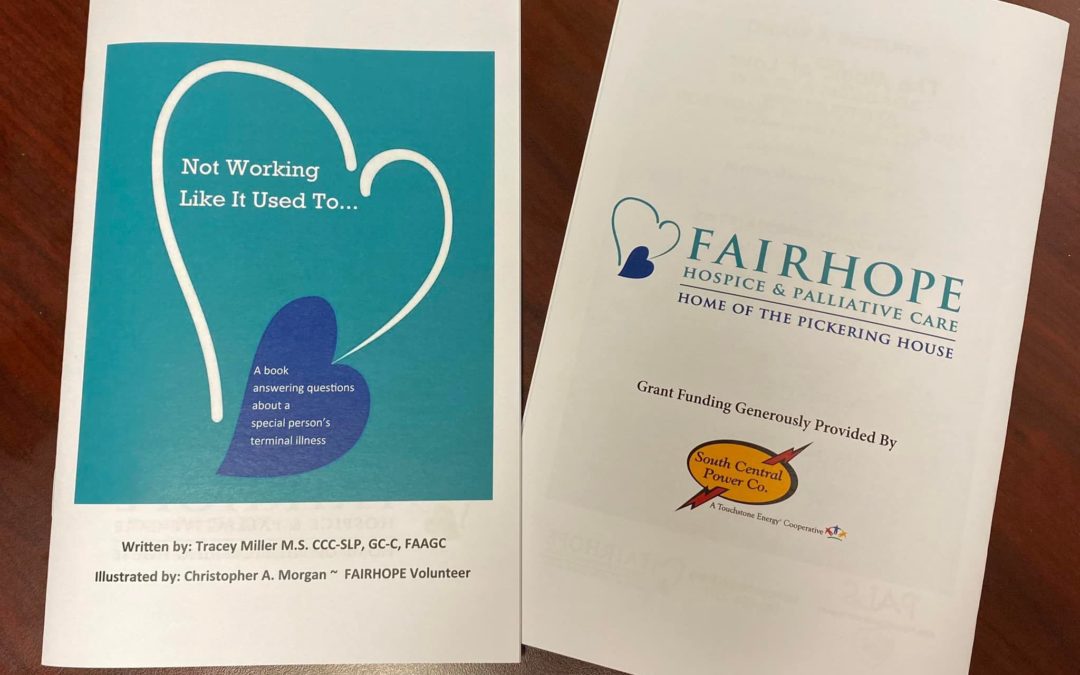
LANCASTER, Ohio (August 24, 2022) — FAIRHOPE Hospice & Palliative Care, Inc. was awarded a grant of $895 from South Central Power Company Foundation to print an additional 530 copies of the book, “Not Working Like It Used To: A book answering questions about a special person’s terminal illness.” The book educates children and families with accurate information about the end-of-life process and guides adults in their discussions with children.
 The book was written by Tracey Miller, M.S. CCC-SLP, GC-C, FAAGC and illustrated by Christopher A. Morgan, a FAIRHOPE volunteer, to enhance end-of-life conversations that were shifted to a virtual setting or telephone conversation during COVID-19. It is available to partners, families, and children free of charge through medical facilities, healthcare providers and counselors.
“Coming to terms with the death of a special person is extremely difficult for children and families,” said Kristin Glasure, FAIRHOPE President & CEO. “Children naturally fill in missing pieces of information, which is why being truthful is key to attaining trust and facilitating healthy reactions throughout the grieving process. This grant increases our ability to serve our community by allowing us to further print and distribute this beneficial book as part of our tool kit of support services for those in need of end-of-life education.”
by Fairhope Hospice | Jul 27, 2022 | Uncategorized
By: Kristin Glasure, President & CEO, FAIRHOPE Hospice & Palliative Care
As I recently shared, it is important to ensure
older adults stay safe during the excessive heat of the summer months. Staying indoors or planning outdoor activities in the early morning or late evening can help avoid the heat of the day. Here are 10 ideas to plan on hot days.
- Splash or soak. Water-based activities, from floating to participating in a water aerobics class to swimming, offer older adults a wide range of options to enjoy while in the pool. When the temperatures are extremely high, an indoor pool is a perfect alternative to being outdoors.
- Read a book. Reading has numerous benefits including reducing stress, enhancing sleep, and sharpening decision-making. Churches and libraries may have an existing book club or family members and friends can arrange to read the same book. Look into alternatives like audio books or large print versions if eyesight is an issue.
- Play games. Board games and card games are fun ways to help older adults prevent boredom while also socializing. Putting puzzles together can help engage the mind, improve concentration skills, and provide a sense of purpose through the accomplishment. For more active older adults, games that can be played on an indoor court like Pickleball or even cornhole can provide hours of entertainment and physical exercise.
- Get artistic. Artistic activities provide creative opportunities to stimulate the senses. Crafts, working with clay, sewing, making a blanket, or creating a painting can help stimulate the senses and boost mood. Taking photographs indoors allows for connecting to the environment in a new way with the option to display favorite shots. Going through old photos can trigger reminiscing about the past, from days at an amusement park to trips across the country.
- Cook. Cooking can be a therapeutic activity that allows for a sense of purpose and a creative outlet. Eating healthy with fresh fruits and vegetables can provide valuable nutrition and result in delicious home-cooked meals. If able, older adults can enjoy helping with food preparation with a child or grandchild. Indoor picnics are a great option for families and friends to bond and connect over favorite summertime foods like watermelon, salads, and smoothies. Planting vegetables in pots can allow for indoor gardening. And when ready for a treat, plan an ice cream social with several different flavors of ice cream and set up a “build your own sundae” bar complete with toppings to indulge the sweet tooth.
- Be a tourist. If you live in a city, take an air-conditioned tour to see the local sights or drive around town to check out new construction, blooming flowers, or even find a cool place in a wooded area for bird watching. Public libraries, recreation centers, civic buildings, churches or other places of worship and senior centers often offer free opportunities inside a cool building. Museums and aquariums may offer free summer activities or provide senior citizen discounts on tickets. Take advantage of the cooler times of the day by watching the sunrise, visiting a farmers’ market in the early morning or view the sunset or take in a late evening concert.
- Binge watch. Television series and movies can provide an emotional escape for older adults, with a wide variety of genres available.
- Eat out. A favorite snack or restaurant can offer an immediate mood boost. Enjoy coffee and pastry from a favorite breakfast spot or a sandwich from the local diner. When dining out isn’t feasible, enjoying take-out at home is another fun option.
- Visit the mall. Shop for specific items, or just browse the window displays. Walking indoors can be great exercise as well. Loved ones can even just enjoy sitting and people-watching in an air-conditioned environment.
- Take a class. Many community centers and colleges offer classes during the summer that can help their creativity grow while connecting socially. Learn a foreign language, how to play an instrument, take an exercise class like yoga, or study literature or astronomy.
